
- 6,800 m² facility in Hengli Town, Dongguan — founded 2005, 100+ people, 80%+ skilled technicians.
- 100+ production machines — milling, turning, mill-turn, grinding; 20+ inspection instruments.
- Verifiable certificates — ISO 9001, IATF 16949, ISO 14001 with registrar-checkable numbers.
- Registration No. 91441900MA4UWT6X39 — legal name Dongguan Zhuohang Ltd
Where is the factory, and why does location matter?
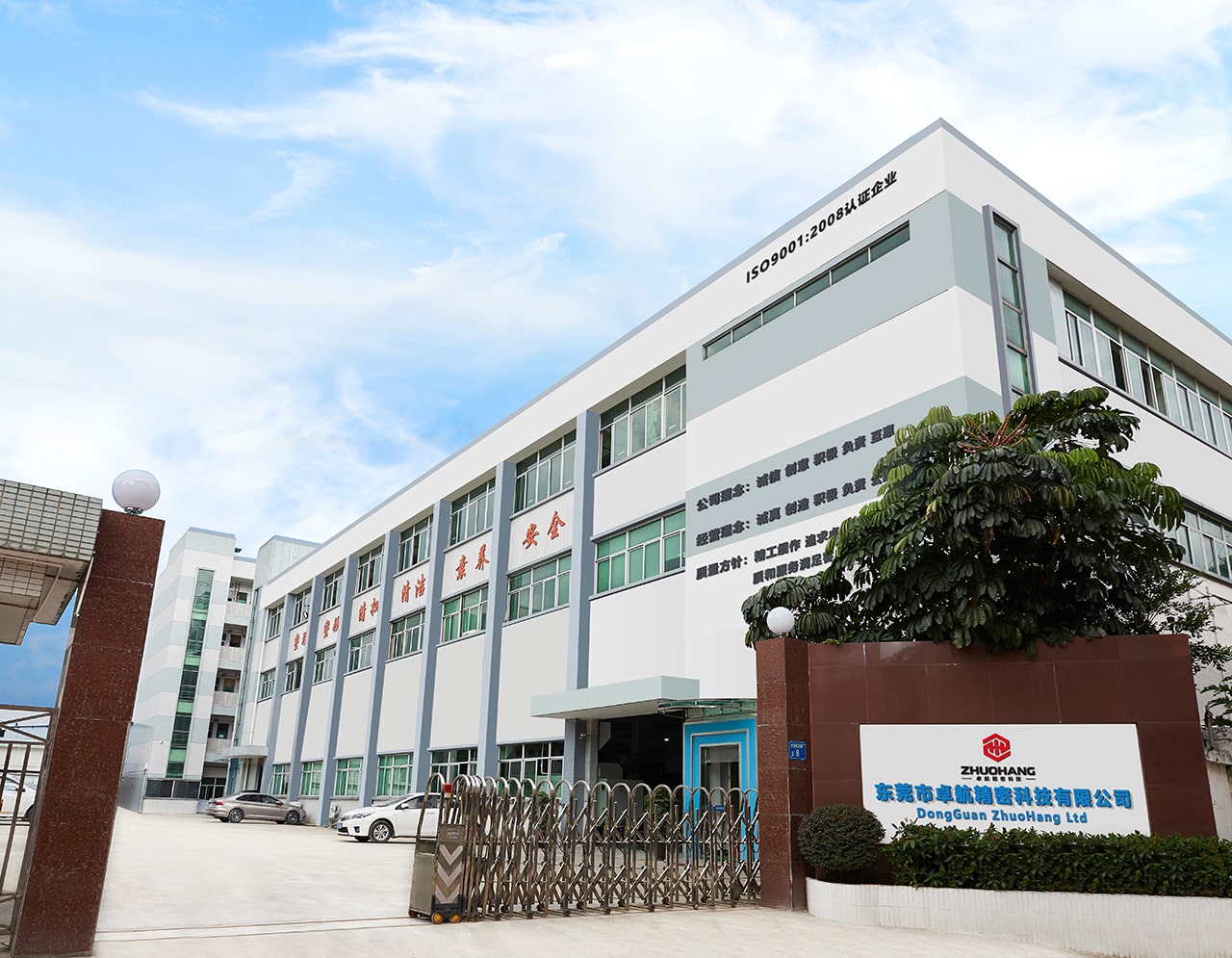
The facility sits at No. 8, Shuibian Songyuan Road, Hengli Town, Dongguan, Guangdong, China 523470 — in one of the world's densest precision-machining supply regions. Location matters for risk because it determines access to raw material, to secondary-process partners, and to logistics. A factory in a machining cluster can re-source bar stock and surface finishing faster than one isolated from the supply base.
It also matters for accountability. A physical address you can verify, with a legal name and a registration number behind it, is the difference between a manufacturer and a forwarding address. Dongguan Zhuohang Ltd, registration 91441900MA4UWT6X39, founded in 2005, is a concrete legal entity, not a brand shell.
What does the machine count tell you about capacity risk?
A factory's machine count is its capacity ceiling and its redundancy floor. This facility runs 100+ production machines across milling, turning, mill-turn, and grinding, plus 20+ inspection instruments. The spread matters as much as the total: a failure on any single machine can be absorbed by the others, and inspection can continue on parallel instruments while one lot is quarantined.
| Area | Count | Risk implication |
|---|---|---|
| CNC milling (3/4/5-axis) | 50+ / 20+ / 20+ | Redundancy across all axis classes |
| CNC turning | 25+ lathes | Turning work spreads across many spindles |
| Precision grinding | 7+ grinders | Surface, centerless, cylindrical coverage |
| Inspection instruments | 20+ | Parallel verification capacity |
How do you verify the factory is real before ordering?
The cheapest due-diligence step in sourcing is a live floor walk, and a real factory has nothing to hide. Ask for four things in one video call: the machine list with counts, the certificate numbers, a running machine, and a live inspection record. A manufacturer can produce all four on the spot; a trading desk can produce none.
- Machine list with counts — names and quantities, not a brochure.
- Certificate numbers — ISO 9001, IATF 16949, ISO 14001 numbers you can check with URS.
- A machine running — the floor, live, not a stock photo.
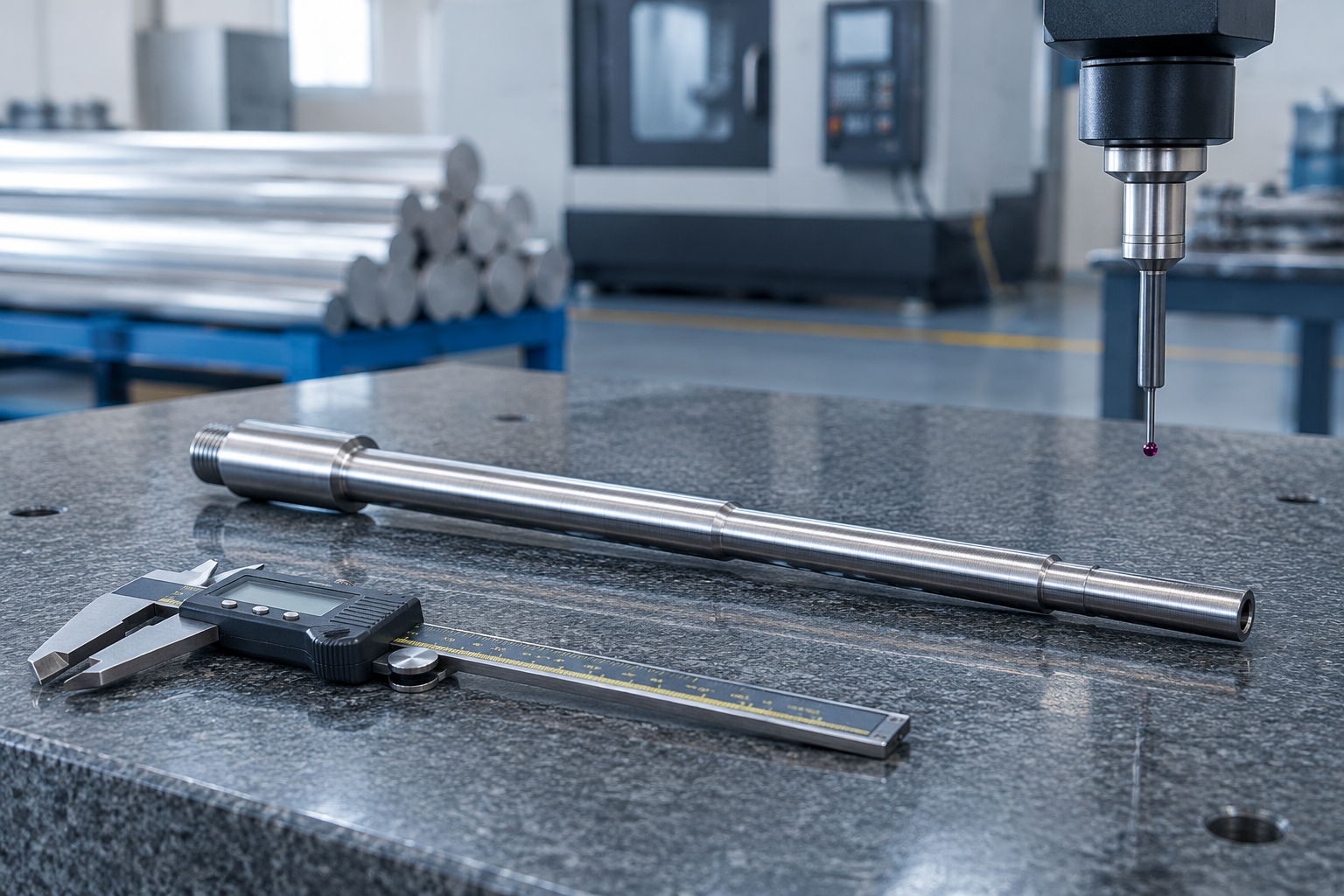
- An inspection record — a CMM report or SPC chart from a real job.
The point is not to interrogate; it is to confirm the factory exists as described. A supplier that clears all four has removed the largest single unknown from your risk assessment.
What does a single-location factory mean for continuity risk?
A single 6,800 m² site concentrates your geographic risk in one location, and that is a fact to manage, not a flaw to hide. The mitigation is internal redundancy and contingency planning. Enough machines that one failure does not stop your part. Enough inspection capacity that a CMM going down does not stall shipment. A traceability system that isolates a quality hold to one lot instead of shutting the line.
What you are buying, in risk terms, is not the building; it is the system inside the building. Ask how the factory keeps your parts moving when one machine fails or one lot is held — a supplier that can answer that question concretely is one whose single-location risk you can live with.
What certifications does the factory hold?
Certification is a third-party audit you inherit without paying for it. The factory holds three, and the numbers — not just the logos — are what make them usable in a risk assessment.
| Standard | Certificate number | Scope |
|---|---|---|
| ISO 9001:2015 | 116024/A/0001/UK/En | Machining of metal parts |
| IATF 16949:2016 | 131941/A/0001/SM/En | Manufacture of CNC metal machining parts (excludes product design, Clause 8.3) |
| ISO 14001:2015 | 116024/B/0001/UK/En | Environmental management related to machining of metal parts |
Honest scope note: IATF 16949 excludes product design under Clause 8.3. This is a build-to-print factory — design responsibility stays clearly on your side, which is itself the kind of honesty a risk audit should reward.
Who runs the facility, and why does the workforce matter?
Machines do not hold tolerance; the people who set, run, and inspect them do. The facility is staffed by 100+ people, with 80%+ skilled technicians and 60% of the workforce holding 5–10 years on the job. That depth matters for risk because a process is only as stable as the experience keeping it in control, and a senior workforce is less likely to drift than a rotating one.
For you, the workforce is a lagging indicator of continuity: it tells you the shop has kept skilled people through years of production, which is exactly the stability you want in a single-source supplier. The founder's 28 years of industry experience sits behind the operation.
Workforce depth is also a hedge against a specific failure: the key-person risk that lives in every shop. When one operator knows the finicky setup and the process is not written down, that operator is a single point of failure wearing a name tag. The mitigation is the same as for machines — documentation and a second trained hand. Ask whether the process is written down and whether a second person can run it; a shop that says yes to both has removed a continuity risk you would otherwise carry invisibly.
The question to carry into an audit is where skill is concentrated, because key-person risk hides in the roles that are hardest to back up.
| Role | Risk if single-threaded | What to verify |
|---|---|---|
| Setup / programming | One setter knows your part's fixture and offsets | A written setup sheet and a second trained setter |
| Inspection / CMM | One person can read the measurement reports | A documented measurement procedure, not tribal knowledge |
| SPC / quality | One person reads the control charts | Reaction rules written down, not held in one head |
A senior workforce is good; a senior workforce with the process written down is what survives a resignation. The shop that can hand you a setup sheet and name the backup operator is one whose continuity does not depend on any single employee, which is the workforce equivalent of the spare machine.
What contingency planning sits behind the factory?
Contingency is the difference between a supplier that absorbs a problem and one that transmits it. The factory's planning is visible in its structure: process redundancy across a floor of 100-plus machines, parallel inspection capacity, batch-level traceability that isolates a hold, and named secondary-operation partners for surface finishing and heat treatment. Each of these is a lever that turns a potential line-down event into a manageable, local correction.
How do you run a factory-level risk audit from a distance?
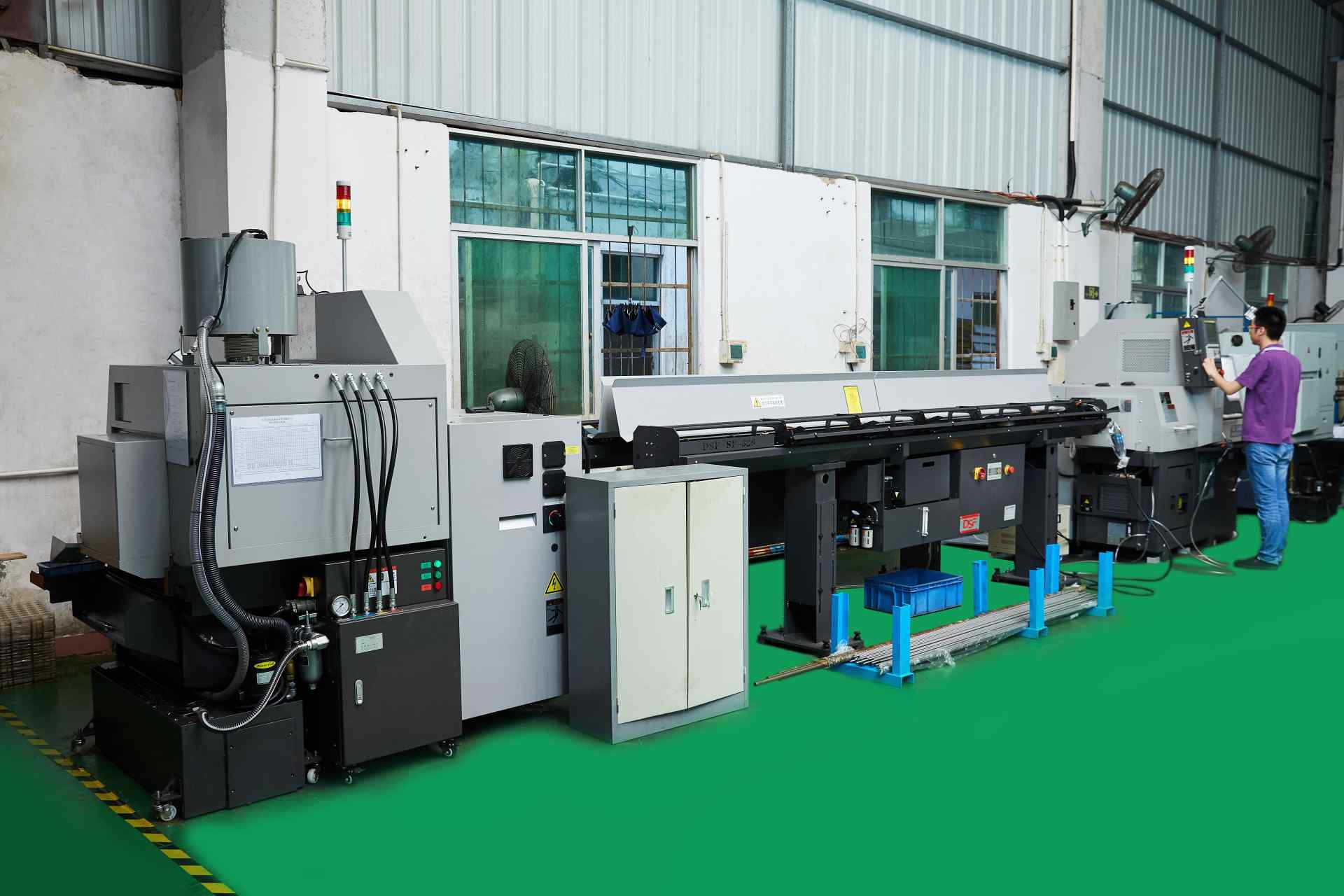
You do not need a plane ticket to audit the essentials. A written audit can confirm the address, the registration number, the machine list, the certificate numbers, and the lead-time logic — all in an afternoon. A live video call adds the floor walk and the running machines. A sample order, at MOQ 1 piece, adds the final proof: a real part, with a real inspection report, produced under the same discipline as the production run.
The sequence — document, then video, then sample — is a risk audit you can run from your desk. Each step removes one unknown, and by the time you commit volume, the factory is no longer a bet; it is a verified dependency.
How do machine brand and configuration affect your part's risk?
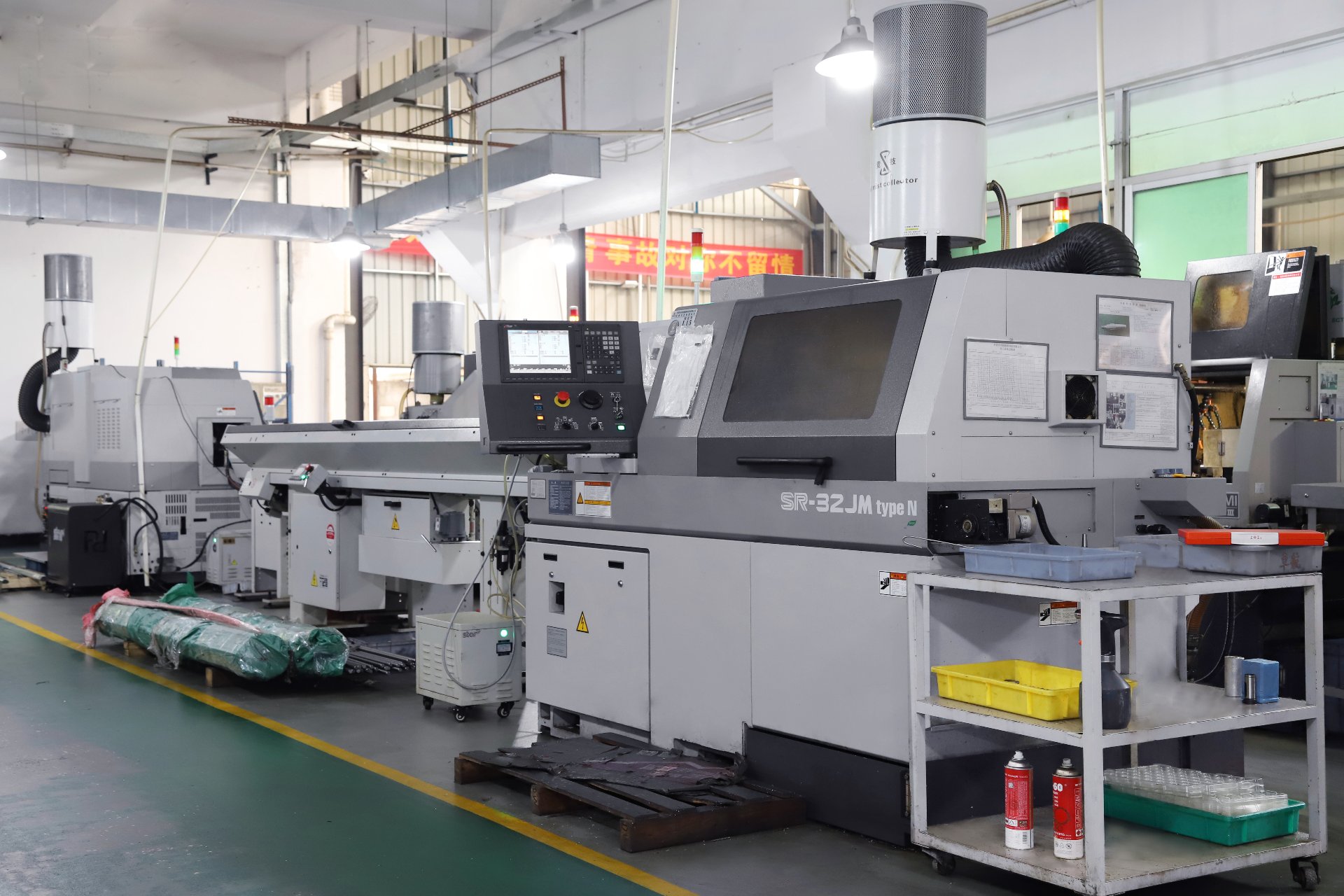
Machine count tells you how much capacity exists; machine brand and configuration tell you what that capacity can actually do. A shop running Mazak, Brother, TSUGAMI, and Sodick machines — plus Citizen and Star Swiss-type lathes on the turning side — is running the class of equipment a precision part actually demands, not a mixed bag of whatever was available. The brand matters less than the configuration, and the configuration is what you should read: a 5-axis mill with a trunnion, a Swiss lathe with a sub-spindle and driven tools, a mill-turn center that turns and mills in one clamping.
Why this is a risk question: your part's features map to a specific machine configuration, not to a generic "CNC" label. If the shop does not own the configuration your part needs, it will either decline the job or farm it out, and a farmed-out job is a hidden dependency you did not sign up for. Ask which machine, by brand and configuration, will run your part, and confirm it exists on the floor. A shop that answers with a specific machine has already done the routing in its head; a shop that says "our machines can handle it" has not.
| Machine configuration | What it produces | Risk it removes |
|---|---|---|
| Swiss-type lathe, sub-spindle + driven tools | Slender multi-diameter parts in one clamping | No re-clamping on back-side features — one locating error fewer |
| 5-axis mill with trunnion | Complex prismatic parts, multi-face in one setup | Removes multiple fixture re-locates and their tolerance stack |
| Mill-turn center | Turned and milled features from one reference | Concentric features stay on one datum, not re-established |
| Surface / centerless / cylindrical grinder | Ground finishes to ±0.002 mm | Tight-band finishing stays in-house, not at a partner |
Read the configuration against your drawing, not against the brand name. A shop that owns a 5-axis mill but not a trunnion cannot reach five faces the way a true 5-axis job needs; a shop that owns Swiss lathes but no sub-spindles will farm out every back-side feature. The machine list tells you the shop can produce; the configuration list tells you whether it can produce your geometry without a hidden hand-off.
How does the Dongguan supply cluster de-risk raw material and finishing?
The location in Hengli Town, Dongguan is not incidental to risk — it is a structural hedge. Dongguan sits inside one of the densest precision-machining regions in the world, where bar-stock distributors, heat-treat houses, plating lines, and tooling suppliers are all within a short drive. That density shortens the re-supply loop: when a material lot fails incoming XRF, a replacement from a local mill is hours away, not a week on the water.
The same density applies to secondary operations. When titanium stress relief or a specialized finish runs through a qualified partner, that partner is reachable and auditable, not an anonymous shop in another region. You should read location as supply-side redundancy: the factory's own machines are the primary hedge, and the surrounding cluster is the second. A factory isolated from a supply cluster has to carry more inventory and more risk; a factory inside one can re-source faster when something fails.
How does the factory plan around machine loading and reorders?
Capacity risk shows up most sharply on a reorder, not a first order. The first order gets a slot; the reorder competes for whatever is left. A factory that plans its loading — that can tell you which machines are committed, when your part slots in, and what the lead-time logic is — is one you can plan around. A factory that says "no problem" without looking at a schedule is one whose loading you will discover when your reorder lands late.
The planning is visible in the structure: enough machines of each type that a reorder can be absorbed without pre-empting another customer, and a lead-time model that maps to process steps rather than to a single optimistic date. When you ask about a reorder, listen for the logic, not the promise. A supplier that explains why a complex part takes longer — more steps, more setups, more dependencies — is showing you the same transparency it uses internally. That transparency is the difference between a schedule you can trust and a date you hope for.
What does a factory audit actually cost you in time and effort?
A factory audit sounds heavy, but the version that de-risks a sourcing decision is mostly paperwork plus one video call. The written part — address, registration number, machine list, certificate numbers, lead-time logic — takes an afternoon to request and an afternoon to check. The live part — a floor walk with machines running and an inspection record on screen — takes thirty minutes on a video call. The sample part — a one-piece first article with a real inspection report — takes a few days of lead time and proves the process on your geometry.
Weigh that against the cost it avoids: a qualification cycle run on the wrong supplier, a production run scrapped to a drift you did not catch, or a line-down event because the dependency failed. The audit is cheap because the failure it prevents is not. If you treat the audit as overhead, you are pricing it against the wrong baseline; the correct baseline is the cost of discovering the risk after the order.
What this shop actually runs
Capability evidence should come as specifics, not slogans. Behind this guide is a 6,800 m2 plant in Dongguan, China running 100+ CNC machines with 100+ staff. The machine list by category:
- 5-axis machining centres (10+) - Mazak VARIAXIS I-600 (510/910/510 mm travel, 12,000 rpm, 22 kW, 71.6 N·m, 30-tool BT40) and Mazak INTEGREX I-250H S (B-axis 0.0001°, 24 kW, 124 N·m, 38-tool HSK-A63). Aimed at compound-angle parts, single-setup multi-face prismatic work, and aerospace fittings where datum transfer loss is unacceptable.
- 3-axis / 4-axis machining centres (50+) - Brother SPEEDIO S500Z2N / S700Z2N (10,000 rpm, 14/21-tool ATC, 0.7 s tool-to-tool, Z-axis 2.2 G) and Mazak VCE-430A L / VCE-570C L (10,000 rpm, 118 N·m, 24-tool ATC). Aimed at prismatic parts, plates, brackets, housings.
- Swiss-type turning centres (10+) - Citizen Cincom A20-3F7 (Φ20 mm, 10,000 rpm), TSUGAMI B0206-III / B0205-III (Φ20 mm, 0.1 µm), STAR SR-32JII / SR-32J Type N (Φ32 mm, 8,000 rpm). Aimed at long, slender rotational parts at ±0.002 mm.
- CNC turning centres (20+) - HEADMAN T70M/1250 (720 mm swing, 117 mm bore, 3,000 rpm, BMT75 12-station turret). Aimed at shafts, bushings, flanges up to ±0.002 mm.
- Wire EDM (5+) - Sodick AQ535L (550/350/300 mm travel, ±20° taper, 800 kg workpiece). Aimed at hardened tool steel, internal splines, sharp internal corners that milling cannot reach.
- Inspection: Hexagon CMM + 20+ gauges - Hexagon CMM for coordinate measurement, plus vision system, profilometer, hardness tester, coating thickness gauge, XRF for material verification. The 10:1 rule (gauge 10x more accurate than the band) is applied to every feature.
- Machine highlights - VARIAXIS I-600: one-setup multi-face 5-axis + MAZA-CHECK auto-calibration; INTEGREX I-250H S: DONE-IN-ONE mill-turn, B-axis 0.0001° + Ai thermal shield; SPEEDIO S500Z2N / S700Z2N: Z-axis 2.2 G + 0.7 s ATC; Swiss-type: guide-bush switchable + 0.1 µm resolution.
Tolerance: ±0.003 mm CNC milling / ±0.002 mm CNC turning / ±0.002 mm grinding and wire EDM. Capability: Ppk >= 1.67 initial on key characteristics, Cpk >= 1.33 ongoing.
Certificates: ISO 9001:2015 (116024/A/0001/UK/En), IATF 16949:2016 (131941/A/0001/SM/En, with design clause 8.3 excluded, stated openly) and ISO 14001:2015 (116024/B/0001/UK/En), issued to Dongguan Zhuohang Ltd, registration 91441900MA4UWT6X39, founded 2005.
Where we ship: Austria, Belgium, the Czech Republic, Denmark, France, Germany, Greece, Hungary, Ireland, Italy, the Netherlands, Spain, Sweden and the United Kingdom in Europe; Brazil, Canada, Mexico and the United States in the Americas; China, Israel, Japan, Singapore and Sri Lanka in Asia; Australia and New Zealand in Oceania; and South Africa in Africa — plus other countries and regions worldwide, shipped from our base in Dongguan, China.
Contact: Felipe Iglesias, [email protected], +86 13126536955.
Audit this factory on your next part.
Send your drawing to [email protected] or call +86 13126536955, or request a live floor walk before you commit.
Frequently Asked Questions
Where is the factory located?
The facility is at No. 8, Shuibian Songyuan Road, Hengli Town, Dongguan, Guangdong, China 523470. It is a 6,800 m² site with 100+ production machines and 20+ inspection instruments, founded in 2005.
How do I verify the factory is real before ordering?
Ask to walk the floor on a video call and to see the machine list with counts, the certificate numbers, and a live inspection record. A real factory can show all four in one call; a trading desk cannot show the floor.
What does a single-location factory mean for my risk?
In short, A single location concentrates geographic risk, so internal redundancy and contingency planning carry the load. The factory has enough machines and inspection capacity that a single failure does not idle your part, and it can isolate a quality hold to one lot.
What certifications does the factory hold?
ISO 9001:2015 (116024/A/0001/UK/En), IATF 16949:2016 (131941/A/0001/SM/En), and ISO 14001:2015 (116024/B/0001/UK/En), all registrable with URS. IATF 16949 excludes product design under Clause 8.3.
How many machines and people run the facility?
100+ production machines — milling, turning, mill-turn, and grinding — plus 20+ inspection instruments, staffed by 100+ people with 80%+ skilled technicians and 60% having 5–10 years of experience.
Can I visit the factory?
Yes. A factory visit is welcome, and for buyers who cannot travel, a live video walk of the floor and inspection room is available. The point is to let you verify the machines and the quality system yourself.
How do I check whether a Swiss machine is configured for my part?
In short, Ask which Swiss-type lathe, with what sub-spindle and driven-tool configuration, will run your part, and whether it can be completed in one clamping. A sub-spindle lets the shop machine back-side features after part-off; driven tooling lets it mill and drill in the same setup.
What happens if the key operator for my part leaves?
In short, In a shop with the process documented, nothing stops — the setup sheet and measurement procedure are written down, and a second trained hand picks the job up. The risk only exists where the process lives in one person's head.
Continue reading: 3 Axis CNC Swiss Turning · 4 Axis CNC Swiss Turning · 5 Axis CNC Swiss Turning
Standards referenced on this page
- ASTM A582/A582M-12 — Standard Specification for Free-Machining Stainless Steel Bars
- ASTM B209/B209M-21 — Standard Specification for Aluminum-Alloy Sheet and Plate
- ISO 14001 — Environmental management systems — Requirements with guidance for use